May 8, 2026
Business Ready ≠ Investment Ready
by Kevin Harnist
Every founder who has ever raised — or tried to raise — has run into the same confusion, even if they couldn't name it. They get told their company "isn't ready." But ready for what? Not ready to operate? Not ready to scale? Not ready to be funded?
Those aren't the same question. Treating them as if they are is one of the quiet, expensive mistakes the early-stage market keeps making.
Business Readiness (BR) and Investment Readiness (IR) are two different questions. They overlap. They inform each other. But they are not the same thing — and conflating them is how strong businesses get passed over while polished pitches get funded anyway. Our Capital Readiness Assessment scores both, separately, on purpose.
What Business Readiness measures
Business Readiness is the question your operating partner would ask. Is this a real business? Does it work? If a check were never coming, would the thing still hold together?
It looks at fundamentals: model viability, unit economics, evidence of demand, customer retention, the team's ability to deliver, and the durability of whatever advantage exists. It treats the company as a going concern first and an investment opportunity second.
A business-ready company can survive. It might grow slowly. It might never raise. But it works on its own terms. Plenty of profitable, durable companies are highly business-ready and completely uninterested in investment readiness — and that's a healthy outcome, not a failed one.
What Investment Readiness measures
Investment Readiness is a different question, asked by a different person. It is not "Is this a real business?" It is "Is this fundable, at this stage, by this kind of capital?"
Now you are looking at a different set of signals: clarity of the story, credibility of the market sizing, the capital-efficiency narrative, cap-table hygiene, founder-market fit, stage-appropriate metrics, data-room discipline. Whether the round makes sense as a financial product.
Investment Readiness is also stage-specific in a way Business Readiness is not. The signals an angel investor needs from a pre-seed company are not the signals a Series A partner needs from a seed-stage company. You can be deeply ready for one stage and badly miscast for the next.
Four quadrants, not one number
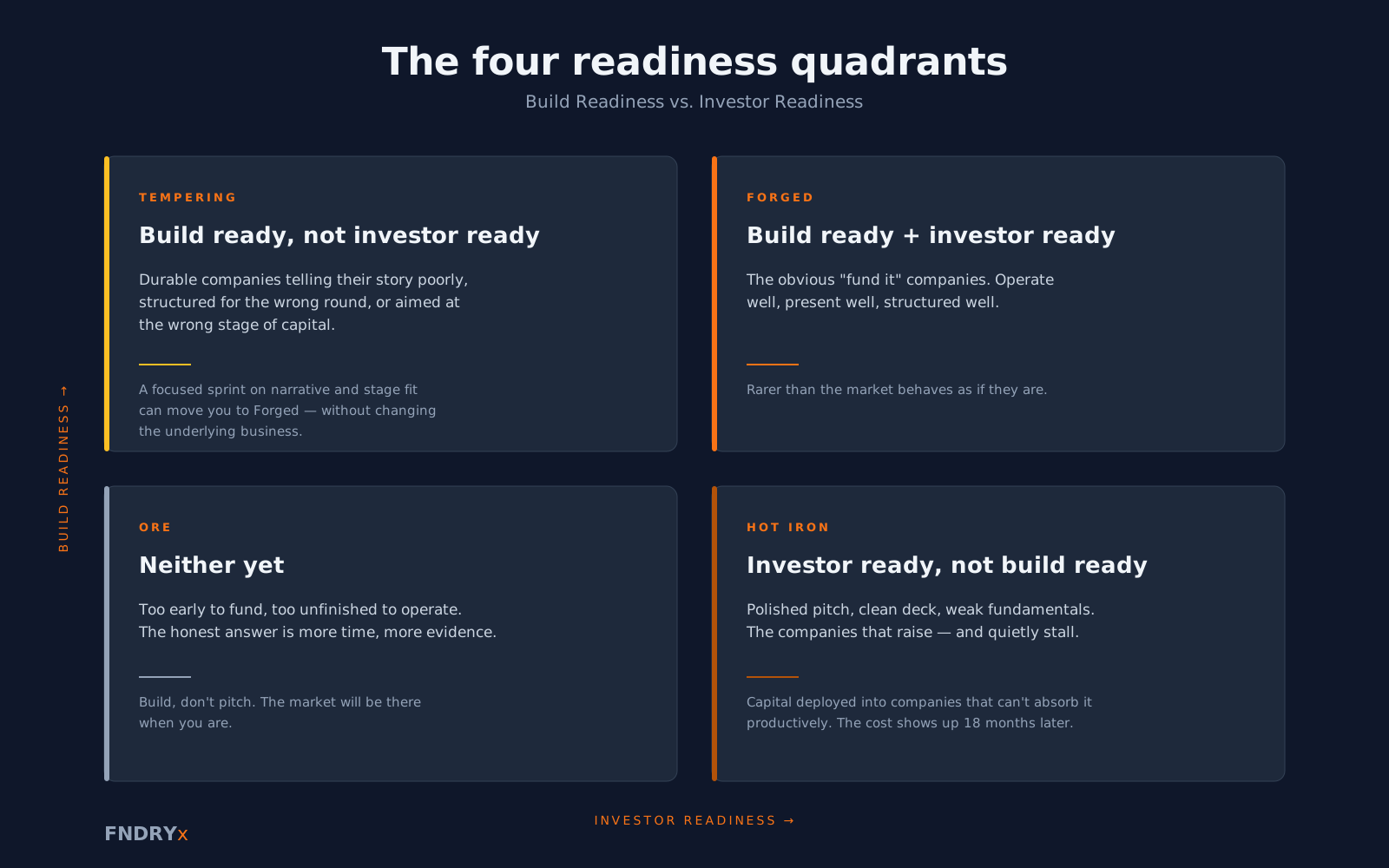
When you separate the two measures, every company falls into one of four buckets.
- Business Ready + Investment Ready — Forged. The obvious "fund it" companies. Rarer than the market behaves as if they are.
- Business Ready, not Investment Ready — Tempering. Durable companies telling their story poorly, structured for the wrong round, or aimed at the wrong stage of capital. Usually the most fixable.
- Investment Ready, not Business Ready — Hot Iron. Polished pitch, clean deck, weak fundamentals. The companies that raise — and then quietly stall.
- Neither — Ore. Too early to fund, too unfinished to operate. The honest answer is usually "more time, more evidence."
Tempering is the most interesting quadrant. Plenty of strong founders live there longer than they should, because no one tells them their business is fine — it's the investment-readiness layer that needs work. A focused sprint on narrative, structure, and stage targeting can move a company from Tempering to Forged without changing a single thing about the underlying business. That's the diagnosis the Capital Readiness Assessment is built to deliver — and most founders never get it cleanly anywhere else.
Hot Iron is the dangerous one — for the founders who land there and for the system around them. When the market funds investment readiness without checking business readiness, capital gets deployed into companies that cannot absorb it productively. The cost shows up two years later as a quiet down-round or a quieter shutdown.
Why the distinction matters for founders
If you are a founder, the practical implication is this: when you hear "you're not ready," ask which kind. The answer changes what you do next.
If your business holds together but your investment readiness doesn't, the work is narrative, structure, and stage fit. That is a weeks-to-months project, not a years-long one. It is also work where outside help compounds quickly, because most of the gap is positioning, not building.
If your investment readiness is there but your business isn't, raising more capital will not fix it — and may make it worse. The work is evidence, retention, and the honest unit economics underneath the deck.
If neither is ready, the most useful thing you can do is build, not pitch. The market will be there when you are.
Why it matters for investors and the ecosystem
For investors, separating the two measures is a defense against pattern-matching on surface signals. A clean deck and a confident founder are evidence of investment readiness. They are not evidence that the underlying business works. The diligence questions are different — and they should be.
For accelerators and ecosystem partners, the distinction maps directly to programming. Business-readiness work is operational: customer development, model refinement, retention. Investment-readiness work is positional: narrative, structure, targeting, diligence prep. Programs that mix the two without naming them often graduate cohorts who got better at pitching but didn't get materially closer to a sustainable business.
A market that can tell the difference funds better and fails less.
One word, two questions
"Ready" is the most overloaded word in early-stage venture. It hides at least two distinct questions, and the answers point in different directions. Business Readiness is about whether the company works. Investment Readiness is about whether the round works. Both can be measured. Neither is a substitute for the other.
The market gets cleaner — and founders waste less time — when we stop using one word to mean two things.
FNDRYx
is the measurement infrastructure between founders and capital — built so merit, not pattern, sets price. If you are a founder wondering which kind of "ready" you actually are, that is exactly the question our Capital Readiness Assessment was built to answer.